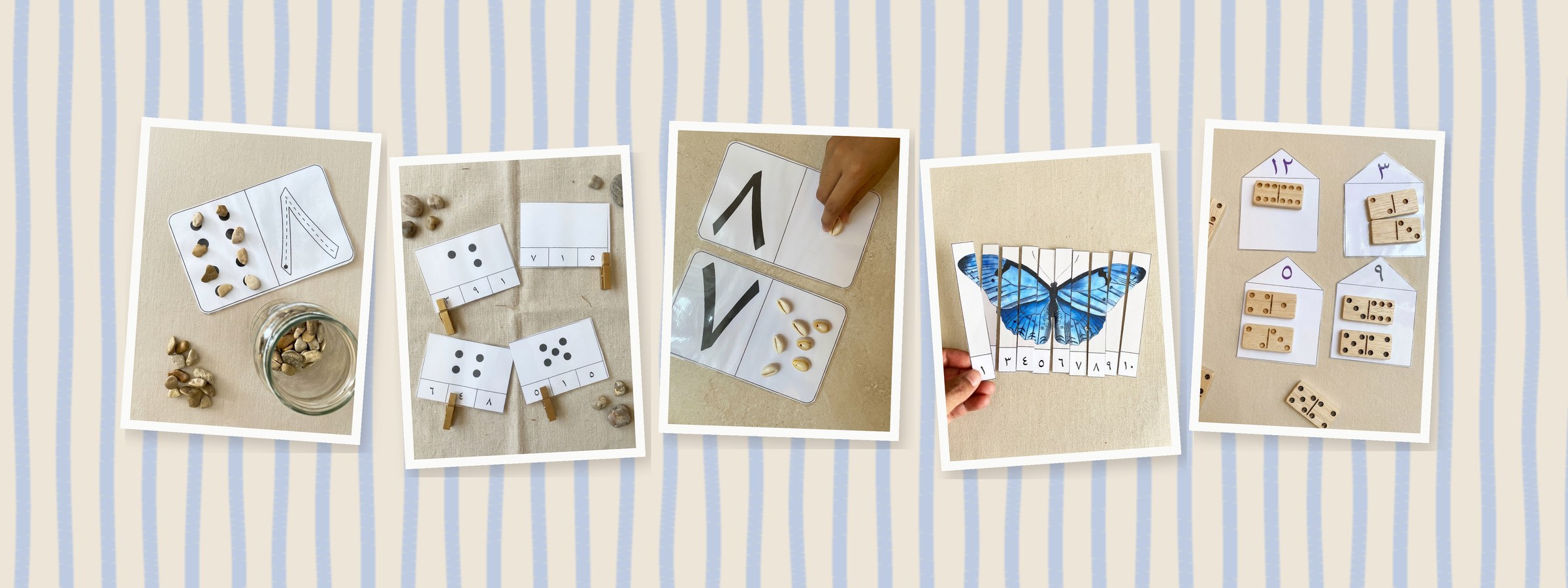
Arabic Numbers for Kids: 5 Montessori Games to Learn 0 to 10 at Home (Free PDF)
Teach the numbers 0 to 10 in Arabic, through play! You will find here five games you can set up at home today, for ages 3 to 9, with what you already have. Children learn numbers the way they learn everything else, by touching, moving, building and playing. Most material for teaching Arabic still arrives as worksheets and drilling, and that is where curiosity goes quiet.
The five games below need no flashcards and no sitting still. Your child meets the Arabic numerals 0 to 10 as something to handle and play with, and the learning comes with it. Everything you need to print is in our free PDF.
What you will find in this guide
- Five games, one page each, set up in under five minutes
- For ages 3 to 9: each game adapts up or down to your child's level
- Materials you already have at home: playdough, stones, shells, clothes pegs, dominoes
Who is it for?
For parents and homeschoolers who want to teach Arabic and Islam to their children while keeping curiosity, creativity and imagination alive. For families who want to take part in their child's learning without turning it into more homework, and who would rather rely on natural conversations, game schooling, arts and crafts and time in nature.
Count in Arabic from the first game
A language is learned by using it. Transliteration gets a child saying the sounds while they carry on thinking in English, and the Arabic stays a code to decipher.
Numbers show this fastest. A child who learns that ٣ means three has learned a correspondence, and every time they count they pass back through their first language. A child who counts three apples in Arabic has simply counted. These games remove the translation step: your child counts, adds and takes away directly in Arabic, and the language arrives with the maths.
- 1
Game 1: From quantity to symbol
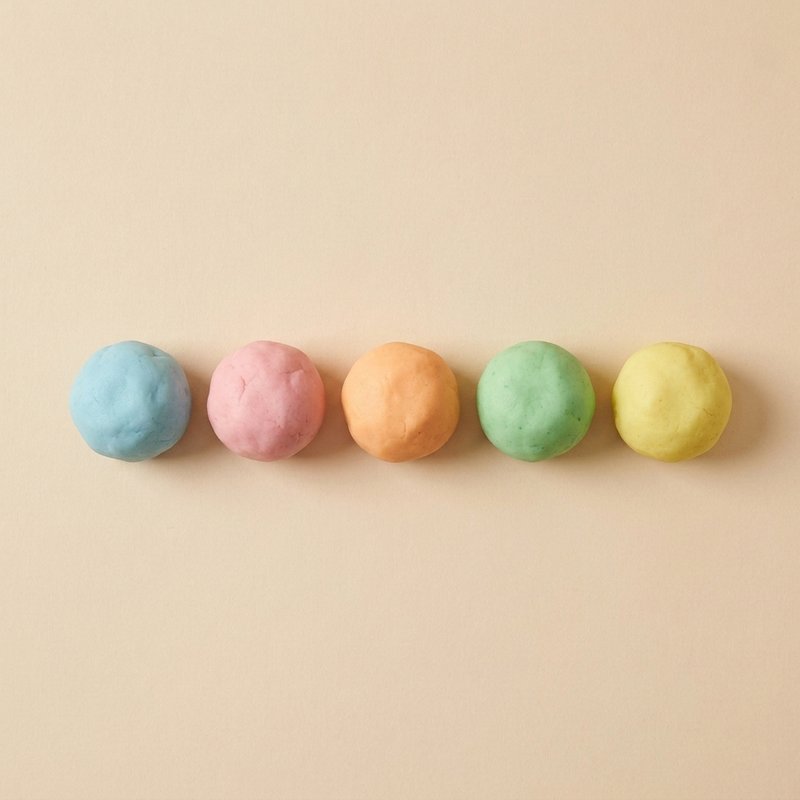
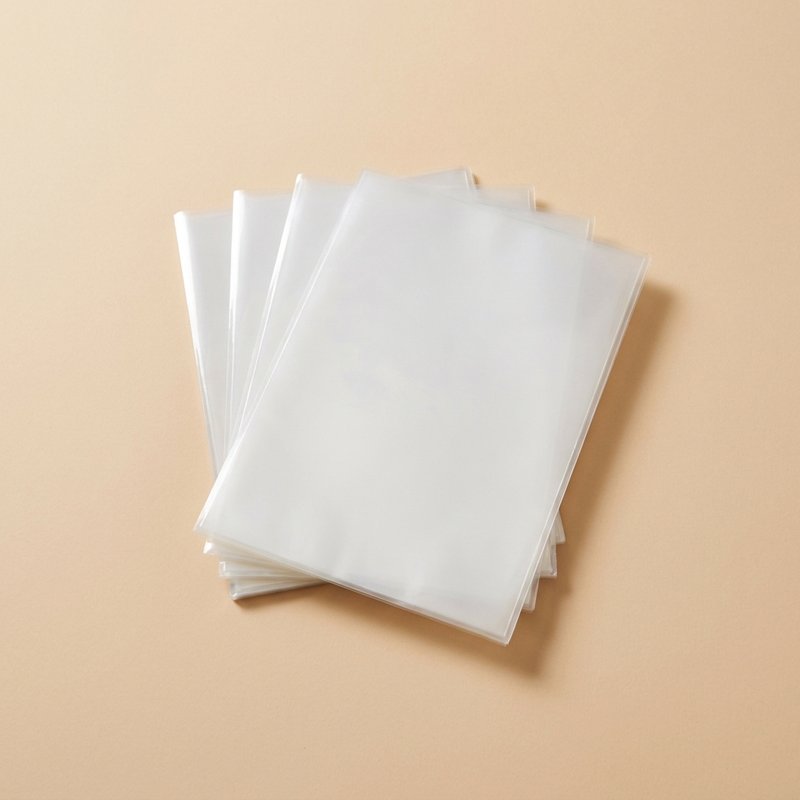
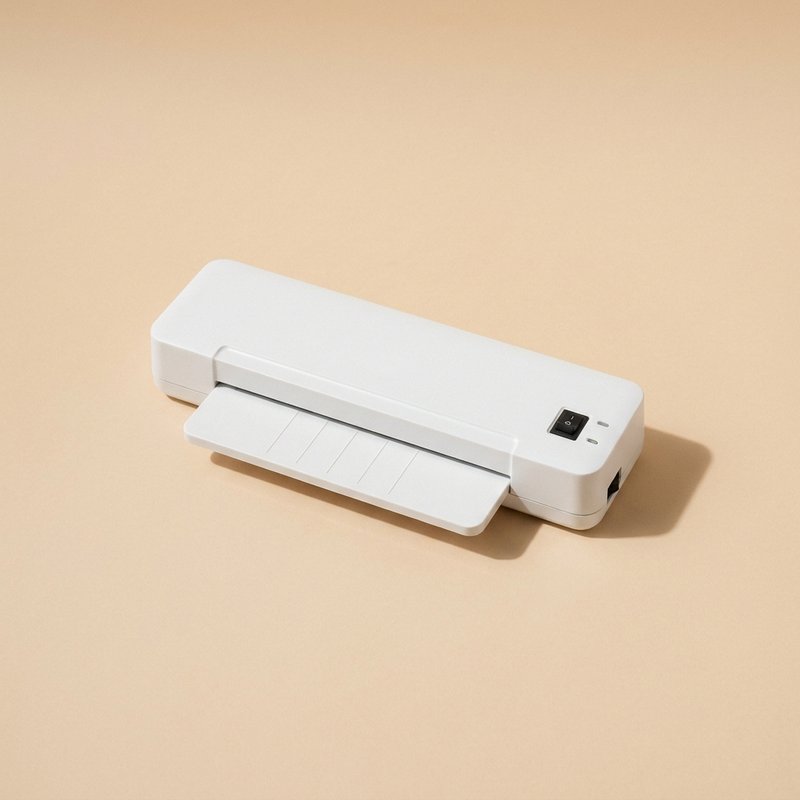
You need: the printed cards, laminated, playdough and a dry-erase marker. Optionally stones, beads, buttons or shells.
How to play: give your child one card, with dots on one side and the Arabic number right next to them. They roll a small ball of playdough for each dot, place one on every dot, then press them down one at a time while counting in Arabic. Then they trace the number beside the dots with the marker, as many times as they like. No ordering yet: one card, one quantity, one symbol.
Variations: small objects instead of playdough, a playdough snake bent into the shape of the number, stones pressed into it so the shape can be felt.
Why it works: the counting happens in Arabic while the hands are busy. By the time your child recognises the symbol, they have said it out loud ten times, felt it under their fingers and drawn it themselves.
- 2
Game 2: From quantity to spontaneous recognition
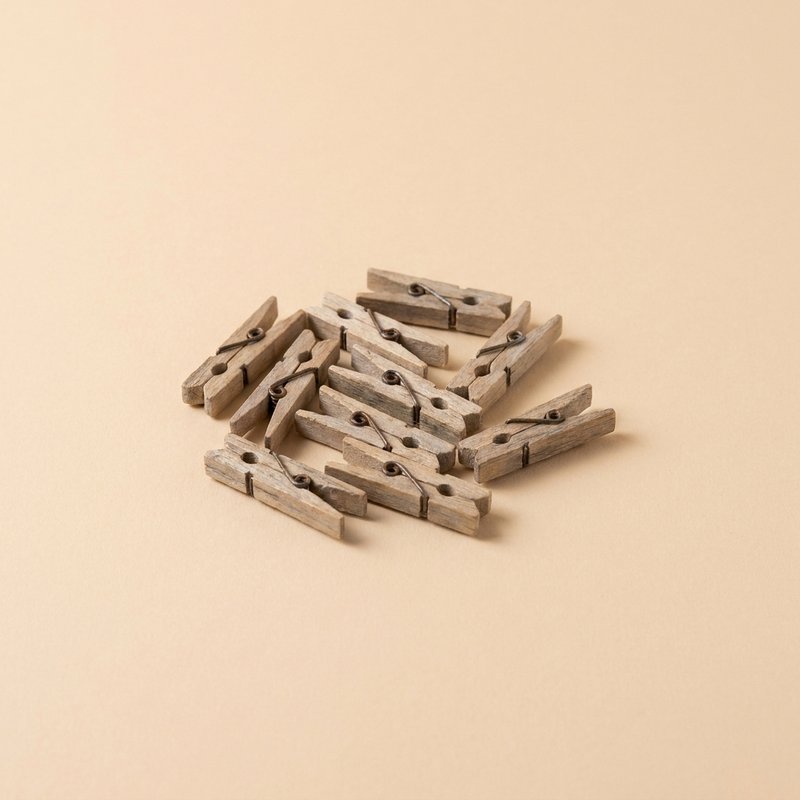
You need: the printed choice cards, laminated, and a few small clothes pegs.
How to play: lay the cards in a tray within your child's reach so they can pick one whenever they want. Each card shows a group of dots and a few Arabic numbers underneath. Your child looks at the dots, finds the matching number and clips a peg on it. No need to count: young children can tell a small quantity at a glance. They turn the card over to check the answer on the back, so the game corrects itself without an adult.
Why it comes second: in game 1 your child linked the symbol to a number of objects. Here they recognise the Arabic numeral straight from the quantity, which strengthens that link without any translation.
- 3
Game 3: From symbol to sequencing
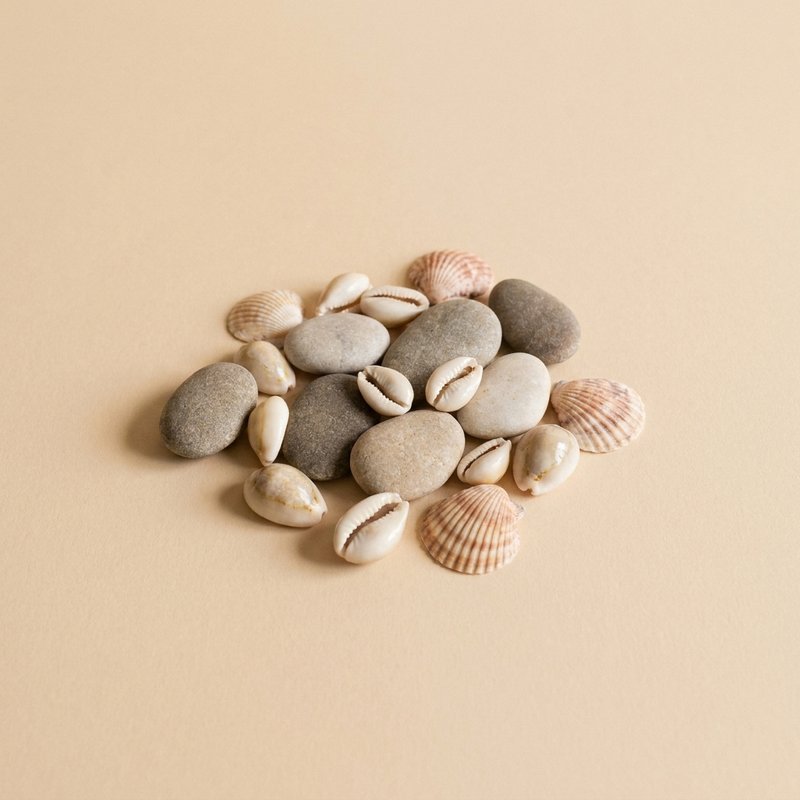
You need: the printed cards and small everyday objects: stones, shells, leaves. This one plays just as well in the park or the garden.
How to play: your child reads the Arabic number on the left of a card and places the right number of objects in the empty space beside it: three stones next to ٣, seven leaves next to ٧. Once a few cards are filled, they line them up on the ground from the smallest quantity to the largest. When every card is in place, they have built the sequence from 1 to 10 in Arabic, without going through 1, 2, 3 on the way.
- 4
Game 4: Sequencing the symbols
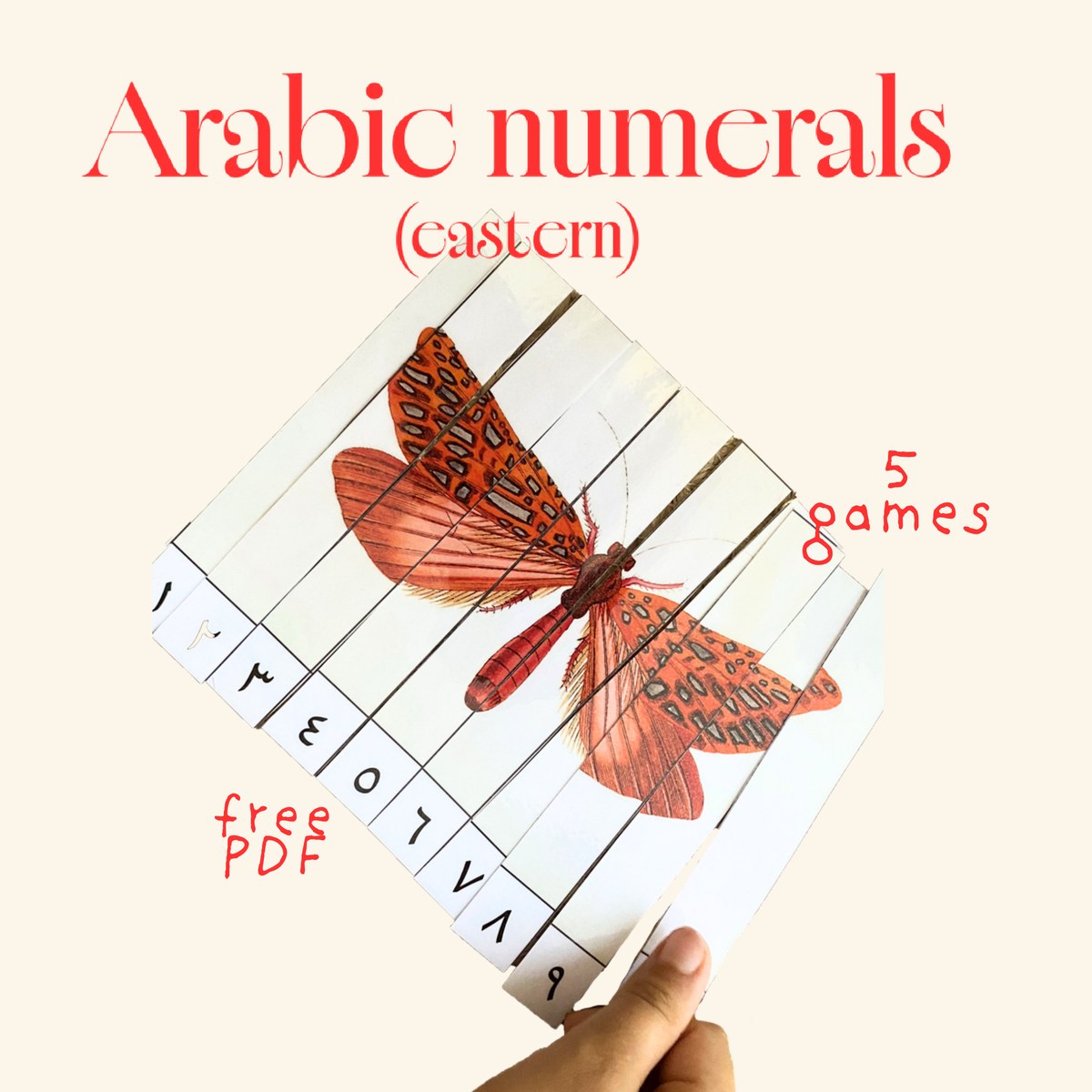
You need: the printed strip puzzles, cut along the lines. Each strip carries an Arabic number.
How to play: mix the strips of one puzzle and give them to your child. They put them back in order following the Arabic numbers, and when the order is right, the picture appears. Your child already knows the quantity behind each symbol, so here they work only on the order, for example that ٧ and ٨, which look so alike, come one right after the other.
- 5
Game 5: Practise maths with Arabic numerals
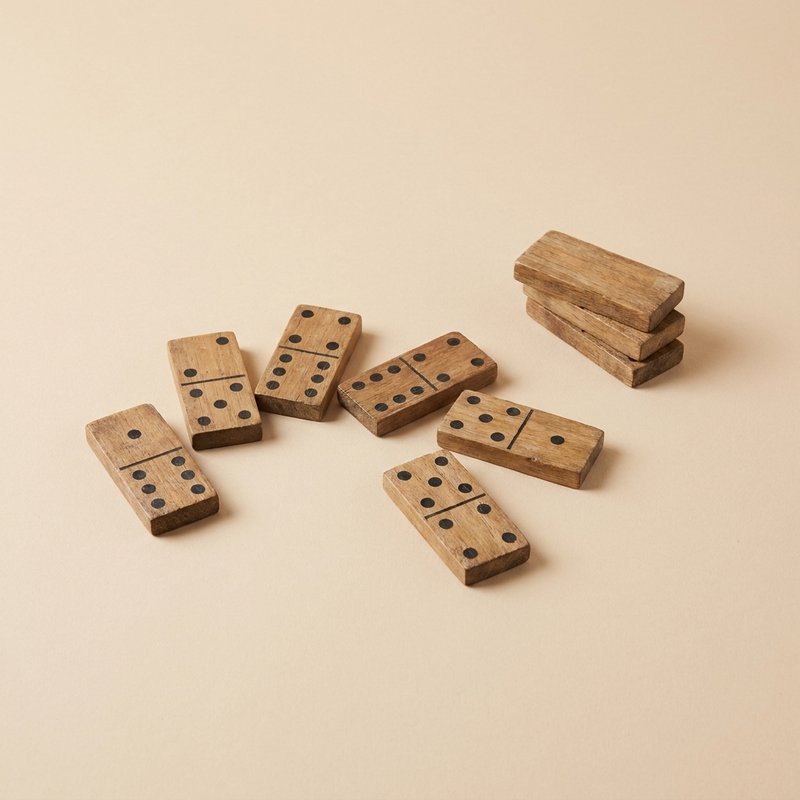
You need: the printed domino houses, laminated, a set of dominoes and a play mat.
How to play: each house has an Arabic number on its roof. Your child looks for every domino whose two sides add up to that number and places it in the house. A house with ٥ on the roof can hold the domino with one and four dots, and the one with two and three dots. Additions, subtractions and many other variations work the same way, directly with the Arabic symbols.
A word from Soumaya
I am an illustrator and graphic designer, trained in Montessori, and a mum. I have watched how differently a child behaves when the thing in front of them is made to be picked up instead of filled in. So I started making what I could not find: games instead of worksheets, things to cut, hold, move and match, and Arabic arriving the way a first language arrives, through use and play.
If your child finishes and asks to play again, it worked!
With love and duas,
Soumaya
You may need